

Wilder, Idaho — When Canyon County Sheriff Kieran Donahue described the October raid on a popular community horse racing venue here, he hailed the detention of 105 undocumented immigrants and flatly rejected allegations that agents used zip ties to restrain some of the dozens of children present.
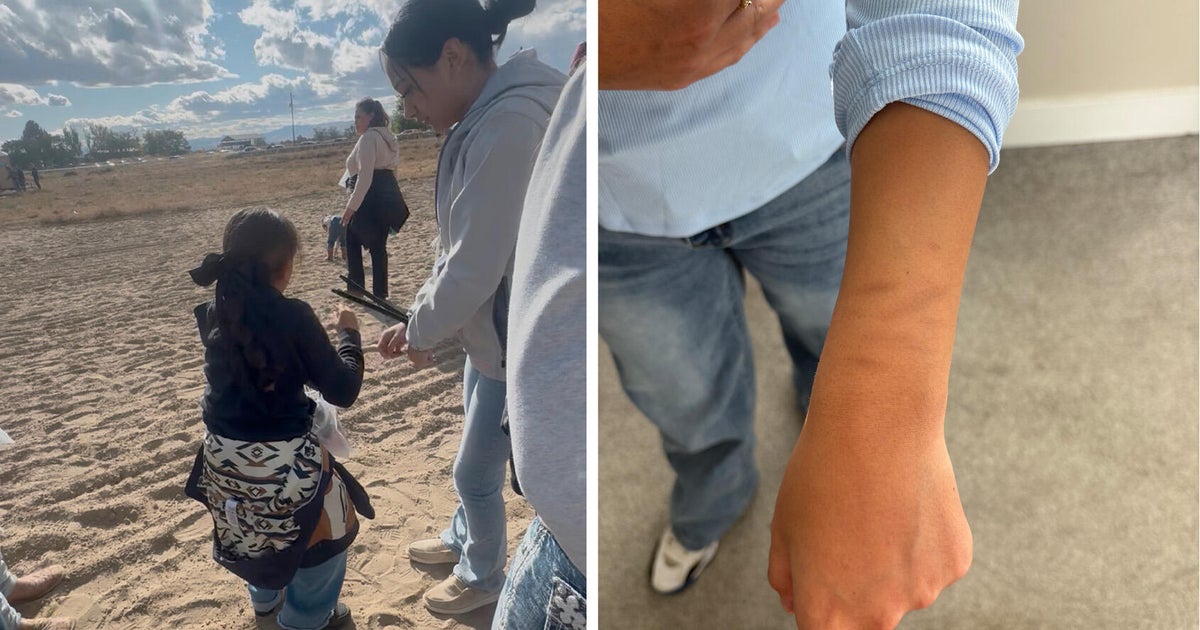
Then he was presented with photographic evidence. Images obtained by CBS News appear to show the zip ties and bruised wrists of Anabel Romero’s 14-year-old daughter SueHey, a U.S. citizen who was tending to her 6- and 8-year-old siblings when the agents descended on the crowd in military-style gear and herded them into a confined area.
“God bless her. I’m sorry she went through that,” said Donahue, a self-proclaimed cowboy who participated in the raid on horseback. “But law enforcement is not evil because we contained everybody and detained them until we sorted it out. That’s not evil.”
Romero family
Mistreatment of children during a militarized police action that involved armored vehicles and flashbang grenades has sparked fresh questions about tactics being employed nationwide in the name of the Trump administration’s wave of immigration sweeps. On Tuesday, the American Civil Liberties Union filed a federal civil rights lawsuit highlighting the mistreatment of families attending the weekend recreation event at La Catedral Arena, many of whom were American citizens of Hispanic descent.
The incident in this small agricultural community about an hour outside of Boise has largely been overshadowed in the national headlines by the immigration surge in Minnesota, where the tactics used by federal immigration agents on children have attracted widespread scrutiny. In one instance, a family alleged that agents deployed tear gas that landed under a car with six children inside. One viral image showed 5-year-old Liam Conejo Ramos, who was wearing a hat with bunny ears and carrying a Spiderman backpack as he was being detained.
But the ACLU argues the Idaho raid signals a frightening normalization of harsh and sometimes violent action by federal law enforcement in the presence of children. Those incidents, the suit alleges, will leave physical and emotional scars.
“They have done long lasting damage to children,” said Jenn Rolnick Borchetta, the ACLU’s deputy project director on policing. “At this moment, when the United States Congress is confronted with a question of how to reign in ICE…the answer is they need to reign in ICE to protect our children.”
The administration denied that children at the Idaho horse track were ever zip-tied.
“ICE didn’t zip tie, restrain, or arrest any children,” Homeland Security spokesperson Trisha McLaughlin told CBS News in a statement.”
She said, “ICE does not zip tie or handcuff children. This is the kind of garbage rhetoric contributing to our officers facing a 1,300% increase in assaults against them and an 8,000% increase in death threats.”
But those who were temporarily detained tell a different story. In an exclusive interview with CBS News, 14-year-old SueHey described the moment law enforcement officers — who she said refused to identify the agencies they worked for — herded her onto the racetrack with hundreds of other detainees and, she says, zip-tied her hands.
“I’m just like there crying, like I’m struggling to breathe,” she said. “I can’t even get the words out.”
Her mother, who says she, too, was bound with plastic zip ties, could not hold or console her daughter.
“I can’t hold her because you guys won’t let me go,” Romero recalled telling the agents. “I’m like, she’s only 14.”
Agents descend on recreation grounds
For spectators attending the horse races last fall, the first sign something was amiss was a helicopter thudding overhead, followed by five armored cars rumbling in. Cellphone video obtained by CBS News shows the moment 200 officers then swarmed the property. Some children reported having guns pointed at them, while others described rubber bullets whizzing over their heads.
The lawsuit alleges agents smashed car windows where children had taken refuge from a chilly rain. One 8-year-old boy appeared on a local news report and described how he had to pick tiny shards of glass out of his mouth.
Juana Rodriguez was bound for hours as her 3-year old son cried and squirmed, according to the ACLU lawsuit that was filed on behalf of three Latino families. The authorities on scene dismissed her pleas to hold her son, instead instructing him to hold onto his mother’s pocket, which they had turned inside out, the lawsuit said.
“As a parent, nothing is more heartbreaking than hearing your child cry out in fear and being told you cannot hold or comfort them,” Rodriguez said in a statement provided to CBS News by the ACLU. “I am a proud U.S. citizen, and I didn’t do anything wrong.”
The lawsuit alleges multiple minors were restrained with the hard plastic cuffs, and many of them were left with welts and bruises on their wrists. While the FBI field office in Boise initially said in a statement that claims of children being zip-tied were “completely false,” officials there later amended that assertion, telling reporters that no “young” children were zip-tied. Later, the Caldwell Police Department, which participated in the raid, issued a statement acknowledging that minors had been zip-tied.
In addition to her 14-year-old daughter, Romero attended the event with her two younger children, who were not zip tied. All were U.S. citizens. She provided CBS News with a detailed description of their treatment by law enforcement.
Romero said she and her children were enjoying the family-friendly event which included free raffles, vendors selling toys for kids and traditional Mexican food. Then a black military-style helicopter swooped in low over the field. Soon, she said, there was pandemonium.
“All of a sudden I just see people running and screaming,” Romero said, describing agents in full tactical gear pointing guns. She said she hid in a horse stall as her mind went immediately to the safety of her three children, who were sheltering from a passing rain shower in the family truck. She called and told them to stay in the vehicle. Agents in tactical gear came searching through the horse stalls, one by one. She said the armed men threatened her when she asked what agency they were with.
“All I’m asking is for clarification, who are you and why am I being detained,” recalled Romero, who said the men responded: “I’m gonna [expletive] blow your head off”
“They kicked me, they punched me, they stepped on me,”she said.
SueHey described to CBS News what she saw next: federal agents in military apparel “running around, opening car doors, and yelling at people to get onto the track.” She looked over to see if her young siblings were OK when two men she thought were “soldiers” opened the truck door. They ordered her out of the vehicle, but fearful of what might happen to her brother and sister, SueHey crouched in place. The law enforcement officers forcibly pulled her out of the truck, she said. She said she saw the officers approach the back door of the truck where her siblings Alfredo, 6, and NeVaeh, 8, were huddled.
“I was brave and I opened the door because I wanted to protect my sister,” 6-year-old Alfredo told CBS News.
SueHey said she broke away from the agents to make sure she would not be separated from her siblings. By then the officers were ordering the three kids to move to the racetrack, where officers had detained a large group of people.
At the same time, agents guided Romero to the track, her hands zip-tied behind her back. She reunited with her children, but the ordeal was far from over. Soon, she said, the agents moved in to zip-tie SueHey. Romero said she protested, telling the officers repeatedly that the girl was only 14 years old. She says they forced the girl’s hands behind her back. Romero begged them to restrain SueHey in front instead, hoping it would be less painful. She says the officers agreed.
Several hours later, ICE agents determined they were U.S. citizens. Romero says she was grilled about her children, who have different last names than her.
“I didn’t know I needed to carry their birth certificates around,” she said.
Romero said their hands were eventually untied and they were ultimately released. Photos show what appear to be deep bruises marked SueHey’s wrists. The physical wounds will heal, Romero said, but the psychological toll and the shattered trust will not dissipate any time soon.
“My parents, they came over here [from Mexico] to give us a better life,” she told CBS News. “That day, I felt like our freedom was taken away from us.”
Gambling claim triggered raid
In Idaho, questions still remain about what prompted the raid.
Sheriff Donahue said the objective was to take down what was suspected to be an illegal gambling operation at the racetrack. The FBI had obtained a federal criminal warrant to arrest five people suspected of running the unlicensed operation.
Sarah A. Miller/Idaho Statesman/Tribune News Service via Getty Images 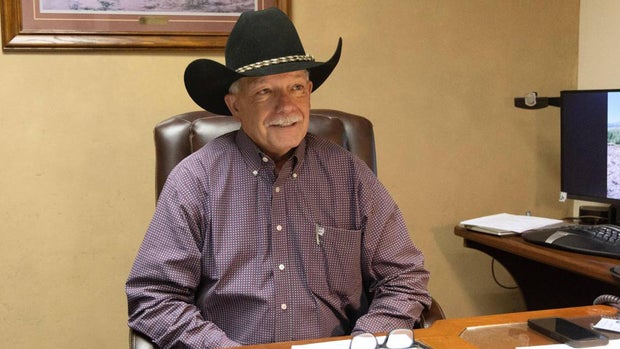
But at the scene, agents arrived with a massive show of force, including representatives from U.S. Immigration and Customs Enforcement. Witnesses told CBS News the agents set about rounding up hundreds of mostly Latino attendees — including dozens of children — to determine whether they were in the United States legally.
According to the ACLU complaint, law enforcement “conspired to abuse a criminal search warrant as cover to go fishing for immigration arrests at an event where they knew they would encounter a large number of Latino individuals.”
After being detained, attendees were questioned about their legal status and directed to show documentation, according to the lawsuit. By the time law enforcement concluded, 105 attendees were determined to be undocumented immigrants and moved to nearby detention facilities for legal disposition. But some 375 others, all of whom were either U.S. citizens or lawful residents, were released after they were able to prove they were in the United States legally.
Nikki Ramirez-Smith, a local immigration lawyer who came to the scene, said she believes authorities misjudged the event, and noted that most of the undocumented individuals had been living in the United States for decades and had no criminal history.
“My opinion is they didn’t know that most of the people there were American citizens,” Ramirez said. “I think law enforcement misjudged it because the event is in Spanish.”
In his interview with CBS News, Sheriff Donahue disputed allegations that the criminal warrant for illegal gambling was effectively a Trojan horse for an immigration dragnet. He said the operation was an FBI initiative four years in the making and he invited ICE to come along. He said cartel activity was the primary objective of the large-scale operation, with immigration enforcement being “secondary or tertiary.”
“We knew there was cartel involvement in this operation,” the sheriff said. “We knew that to be true. [It’s] why we went in.”
Four months after the raid, the only criminal charges filed involved the five individuals arrested for unlicensed gambling.
Meanwhile, according to the ACLU’s complaint, the psychological and emotional fallout from the raid runs deep for the children who experienced the violent, chaotic episode. Three-year old Y.R., one of the plaintiffs identified by their initials, is afraid of the police, according to his mother. A 15-year old, identified as Y.L., reports having recurring nightmares of being detained at gunpoint.
“The lasting fear and emotional distress is widespread,” the complaint says.
Donahue acknowledged the raid had severed ties between local law enforcement and Idaho’s Latino community. Romero agreed, saying the operation had broken the trust that had been built over generations.
SueHey said she would now think twice about calling 911 in an emergency.
“How are they gonna treat me even though I’m a U.S. citizen, even if I’m not doing anything wrong, even if I’m just reporting a crime?” she said. “How are they gonna treat me?”
Source link
